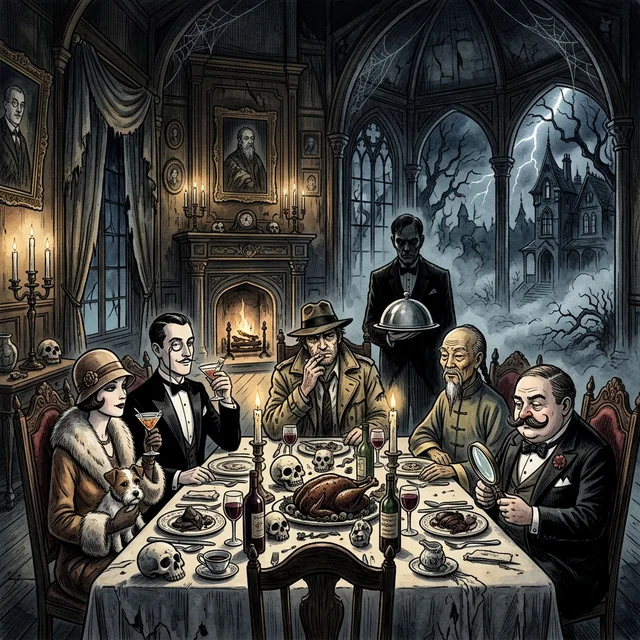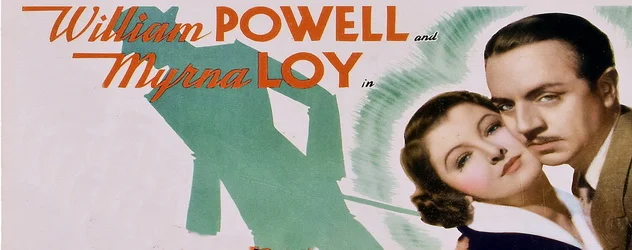
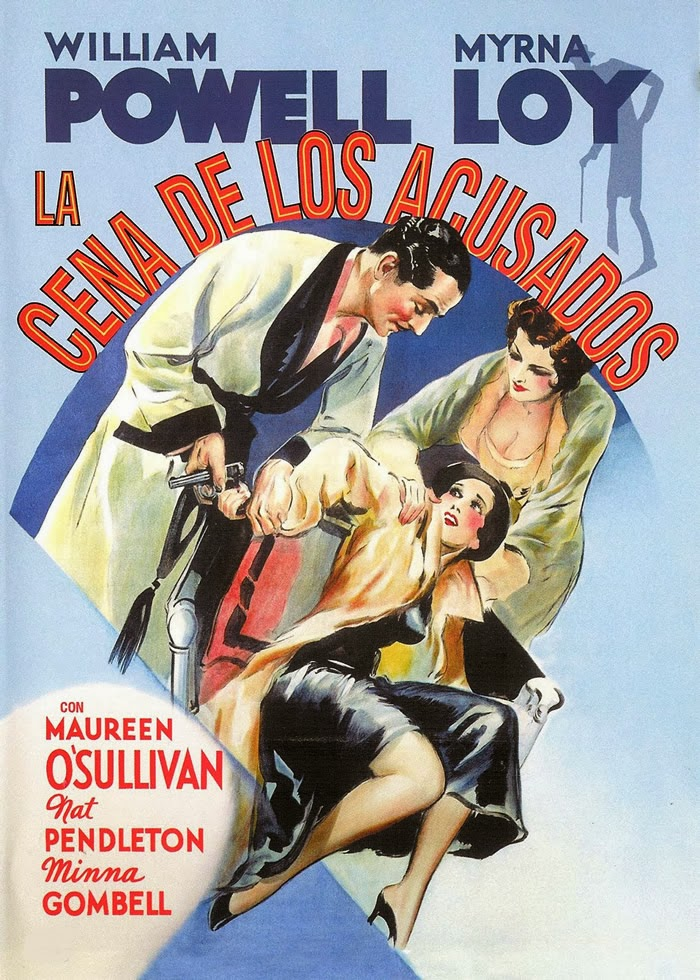
The first time I saw the film The Thin Man, I was far too young to grasp its significance within both the cinematic and literary genres. I had seen plenty of other films framed within the “classical cinema” canon; I didn’t care much for that fellow “Bogart.” To my youthful eyes, he seemed chauvinistic, misogynistic, and I couldn’t fathom why women found him so alluring. With the passing of years, I have come to understand the era in which those stories unfolded and the prevailing mentality of the time. Nevertheless, the film I was watching then felt different. Here was a detective couple who lacked for neither grace nor fortune, and who seemed to work together seamlessly, without belittlement, devoid of that dark, misogynistic streak. Imagine my surprise when I discovered that the author of those Bogart films and the one I so thoroughly enjoyed was the very same man.
Leaving this small anecdote behind, let us focus on this literary exploration.
The Thin Man is a film of high comedy—witty, sophisticated, ironic, and sardonic, laced with a healthy dose of cynicism. Its greatest triumph lies in the portrayal of its two protagonists: that charming, ever-so-slightly inebriated couple and their unique relationship. The film’s depiction of the family dynamic is equally compelling. Interestingly, the movie demystifies the detective archetype that would follow: here, it is not the clients who are wealthy, but the detective himself, thanks to a family inheritance. Typically, in the classic Hard-Boiled novel, the investigator was perpetually short on cash—to name but one example.
Clyde Wynant is a scientist who vanishes abruptly and finds himself accused of various murders committed in his absence. Nick Charles, a wealthy and retired detective, and his wife Nora find themselves embroiled in the case when the family pleads with them to find the missing scientist. Nick resists, but Nora is eager to see him back in action. The film is set during the Christmas season of 1932, creating an ironic contrast between the festive backdrop and the grim reality of murder and family discord. The holiday setting adds a layer of depth and cynicism to the family portrait shown on screen—a portrait that remains bleak throughout. Divorces, lovers, infidelities, self-serving and equally unfaithful stepfathers, mother-son conflicts… the list goes on. A greedy mother, a treacherous lover, a spoiled child, a lazy stepfather. A bit of everything. One can even sense certain Oedipal and Electra complexes in Dorothy’s fixation on her father and Gilbert’s—the son—obsession with his mother.
The Literary and Cinematic Biography of Dashiell Hammett.
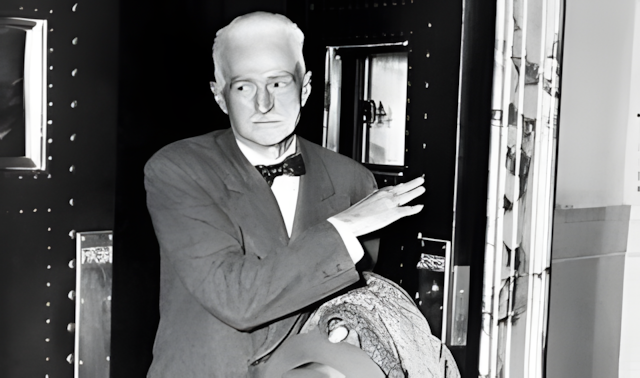
A young man of barely twenty, who had left school at fourteen, Dashiell Hammett—the father of the hard-boiled novel—answered a San Francisco newspaper advertisement that read: “Opening for a determined person with broad experience and a desire to work.” The advertiser turned out to be the famous Pinkerton National Detective Agency. Hammett earned little, a mere twenty-one dollars a week, and he carried a gun. He was wounded several times: once stabbed in the leg, and another time struck with a brick by a suspect, leaving a permanent scar on his head.
From those years, he drew the raw material for his novels. Had he not become a writer, Bogart might never have uttered some of his most legendary lines. Hammett was the architect of the hard-boiled genre; today, one in every three books published belongs to that lineage. In his stories, the boundary between good and evil was never clear-cut; his characters moved with profound moral ambiguity. Every trope of the genre we recognize today was born from his work. The hard-boiled novel opened the doors to film noir—a shade that served as a metaphor for itself, through which reality and human nature could be contemplated. The creator of this universe was consistently a tall, slender man, always adorned with his hat, patent leather shoes, and a pocket hankerchief.
During the First World War, while in service, Hammett contracted the tuberculosis that would haunt him for the rest of his life, forcing him to leave the detective agency. His physician advised him against living full-time with his wife and children; this recommendation compelled him to rent an apartment for himself, and it was then that he began to write. In 1922, he published his first story, The Road Home, in the magazine Black Mask. The character of the Continental Op first appeared in the October 1923 issue in the tale titled Arson Plus. The Continental Op would eventually appear in twenty-eight stories and two novels.
The detective Sam Spade emerged somewhat later, but in all these narratives, situations and characters arose that would become staples of the genre, echoed by every writer who followed. For instance, the femme fatale is foreshadowed by Elvira in The Girl with the Silver Eyes; the redhead in The House in Turk Street; the Russian thief in The Gutting of Couffignal; or the blonde in The Main Death. The archetype would finally be perfected in Brigid O’Shaughnessy in the novel The Maltese Falcon (1930). In 1934, he also penned the script for a comic strip (Secret Agent X–9) for King Features, illustrated by Alex Raymond.
All of his major works were written in the span of just seven years; afterward, he fell into a creative block that he apparently could never overcome. He lived the remainder of his life on the fame and fortunes derived from those early works.
There are over thirty films based directly or indirectly on his writings. The first to attempt an adaptation was Rouben Mamoulian, who in 1931 directed City Streets, starring Gary Cooper. Far more successful was the 1934 film The Thin Man. This film sparked a series of seven movies starring William Powell and Myrna Loy, along with their courageous (or rather, cowardly) dog, Asta. However, only the first film was a direct adaptation of Hammett’s novel. Another novel adapted for the screen was The Glass Key. Undoubtedly, the most significant adaptation is The Maltese Falcon, directed by John Huston in 1941 and starring Humphrey Bogart; it is considered the foundational stone of film noir.
In Spanish cinema, his work was also adapted in 1978 with La ciudad maldita (The Cursed City), which translated the plot of Red Harvest into a Spaghetti Western setting. The Coen brothers also drew inspiration from him for Miller’s Crossing, a film with a very special plot that intertwined elements of both Red Harvest and The Glass Key. Wim Wenders made his first foray into Hollywood with Hammett, which was not based on any specific story but rather cast the author himself as the protagonist of a mystery. In 1990, the film Lilly (directed by Kathy Bates) explored the romantic relationship between Hammett and the American playwright Lillian Hellman.
During the Second World War, he volunteered to fight against Nazism and Fascism. He spent most of the war as a sergeant in the Aleutian Islands, editing an army newspaper.
During the 1950s, the U.S. Congress investigated him and, though he testified about his own activities, he was blacklisted and refused to provide information regarding the identities of other Communist Party members. Hammett served time in a federal penitentiary in West Virginia, where, according to Lillian Hellman, he was assigned to clean toilets.
By 1952, Hammett’s popularity had waned as a result of the hearings. He found himself impoverished due to a combination of the cancellation of the radio programs The Adventures of Sam Spade and The Adventures of the Thin Man, and a lien on his income by the Internal Revenue Service for back taxes dating back to 1943. Furthermore, his books were no longer being printed.
The Grave of Samuel Dashiell Hammett at Arlington National Cemetery.
Hammett passed away at Lenox Hill Hospital in New York from lung cancer, which had been diagnosed two months earlier. As a veteran of both World Wars, he was buried with full honors at Arlington National Cemetery in Washington.
The International Association of Crime Writers annually presents the Dashiell Hammett International Novel Prize during Gijón’s Semana Negra (Black Week) to the best crime novel written in Spanish.
Works.
Novels.
Red Harvest (published February 1, 1929)
The Dain Curse (July 19, 1929)
The Maltese Falcon (February 14, 1930)
The Glass Key (April 24, 1931)
The Thin Man (January 8, 1934)
Short Story Collections.
$106,000 Blood Money (1943), a collection of short stories.
The Continental Op (1945), a collection of short stories featuring the detective from Red Harvest.
The Big Knockover (1966), a nearly complete collection of his stories.
Nightmare Town, a complete collection of all his stories—all sixty-five, including six previously unpublished ones.
Comic Strip.
Secret Agent X-9 (from January 22, 1934, to April 20, 1935), with the complete script for the first story, The Top, and the plots (though contested by some historians) for the following three.