“The scent and smoke and sweat of a casino are nauseating at three in the morning. Then the soul-erosion produced by high gambling—a compost of greed and fear and nervous tension—becomes unbearable and the senses awake and revolt.”
Birth and Family
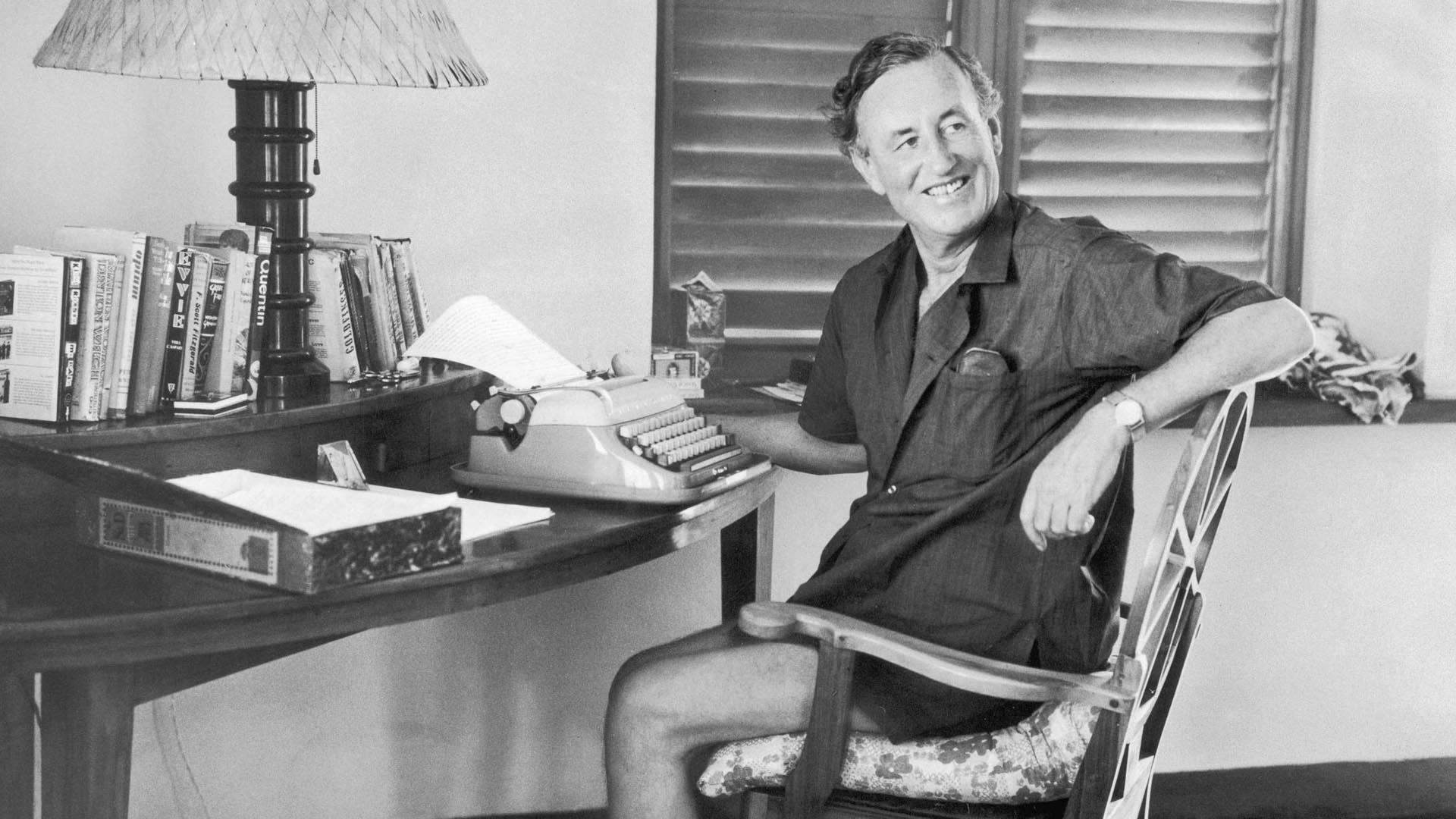
Ian Lancaster Fleming was born on May 28, 1908, at 27 Green Street, in the wealthy London neighborhood of Mayfair.
His parents were socialite Evelyn Rose—her maiden name—and Valentine Fleming, a Member of Parliament for the Henley constituency from 1910. During a brief period of Ian’s childhood, the Flemings lived at Braziers Park, a country house in Oxfordshire. He was the grandson of the Scottish financier Robert Fleming, founder of the Scottish American Investment Trust and the merchant bank Robert Fleming & Co.
After the outbreak of World War I in 1914, Valentine Fleming joined C Squadron of the Queen’s Own Oxfordshire Hussars—a British Army regiment—where he attained the rank of major.
He died in a German bombardment on the Western Front on May 20, 1917. The impact of his death moved Winston Churchill to write an obituary published in The Times, and a commemoration was held at the Glenelg war memorial, as the family owned property in Arnisdale.
Ian’s older brother, Peter (1907-1971), was a travel writer married to actress Celia Johnson. During World War II, he served with the Grenadier Guards and with Colin Gubbins—of the Special Operations Executive—whom he helped establish the Auxiliary Units (specialized and secret British government units). He also participated in operations far from the front lines in Norway and Greece during the armed conflict.
The rest of Ian’s family consisted of his two younger brothers, Richard (1911-1977) and Michael (1913-1940), and a young maternal half-sister, cellist Amaryllis Fleming (1925-1999), whose father was the artist Augustus John. She was conceived during a long-lasting romance between John and Evelyn that began in 1923, six years after Valentine’s death.
Ian Fleming’s Role in World War II in Spain
How the creator of James Bond defeated the Nazis with a floating corpse on the coast of Huelva.
The creator of the world’s most famous and least secret spy was an intelligence agent during World War II. Some of his outlandish ideas helped win several decisive battles.
The spy and later successful novelist Ian Fleming, after spending several days looking for a corpse with waterlogged lungs, found the body of a Welsh alcoholic who had recently committed suicide by ingesting rat poison and had suffered from pneumonia. Pathologist Sir Bernard Spilsbury determined that the condition could match someone who had drowned at sea. Without notifying the family, they removed him from St. Pancras Hospital in London and gave him a new identity: Captain William Martin, born in Wales in 1907, with a girlfriend named Pam (complete with prepared photos and love letters), a recent theater ticket, keys to his supposed home, tobacco, matches, and a British uniform. Furthermore, they chained a briefcase to his wrist containing top-secret documents and sought a place in the Mediterranean to drop him.
The year was 1943, with the Allies defeating Rommel’s Afrika Korps in the desert and preparing to land in Sicily to begin gaining ground against the Third Reich in Europe. They needed a plan to facilitate that landing—a deception that would divert German forces to other fronts. A fan of reading spy stories stationed by the British in Lisbon had a somewhat wild but brilliant idea. His name was Ian Lancaster Fleming, code name 17F as an MI6 intelligence agent, and he proposed launching a corpse into the sea wearing a Navy uniform and carrying a briefcase full of allegedly original documents about a future invasion, not of Italy, but of Greece. Thus was born Operation Mincemeat.
The place chosen to leave the body of the Welsh alcoholic, dressed as a British officer, was none other than the coast of Huelva. Large beaches and small fishing villages where everyone knows everyone, making it hard for something like this to go unnoticed. The body was transported there submerged in ice inside a submarine and left floating in the water, waiting for the sea to carry it to the shore, as it eventually did. Just as London expected, the Francoist police photographed the documents and gave copies to their German allies, although they allowed the British to bury the body. Berlin gave complete credibility to the story, knowing that planes flying between North Africa and the United Kingdom crossed that area. The idea of an air accident in the Strait of Gibraltar was not at all far-fetched to the German secret service.
As a result of this operation conceived by Fleming and carried out by Lieutenant Commander Ewen Montagu, the Germans took the bait, dividing their forces between Greece and Italy, which favored the Allied landing in Sicily.
Winston Churchill called his friend Roosevelt to inform him of the operation’s success: “They swallowed the whole mincemeat.”
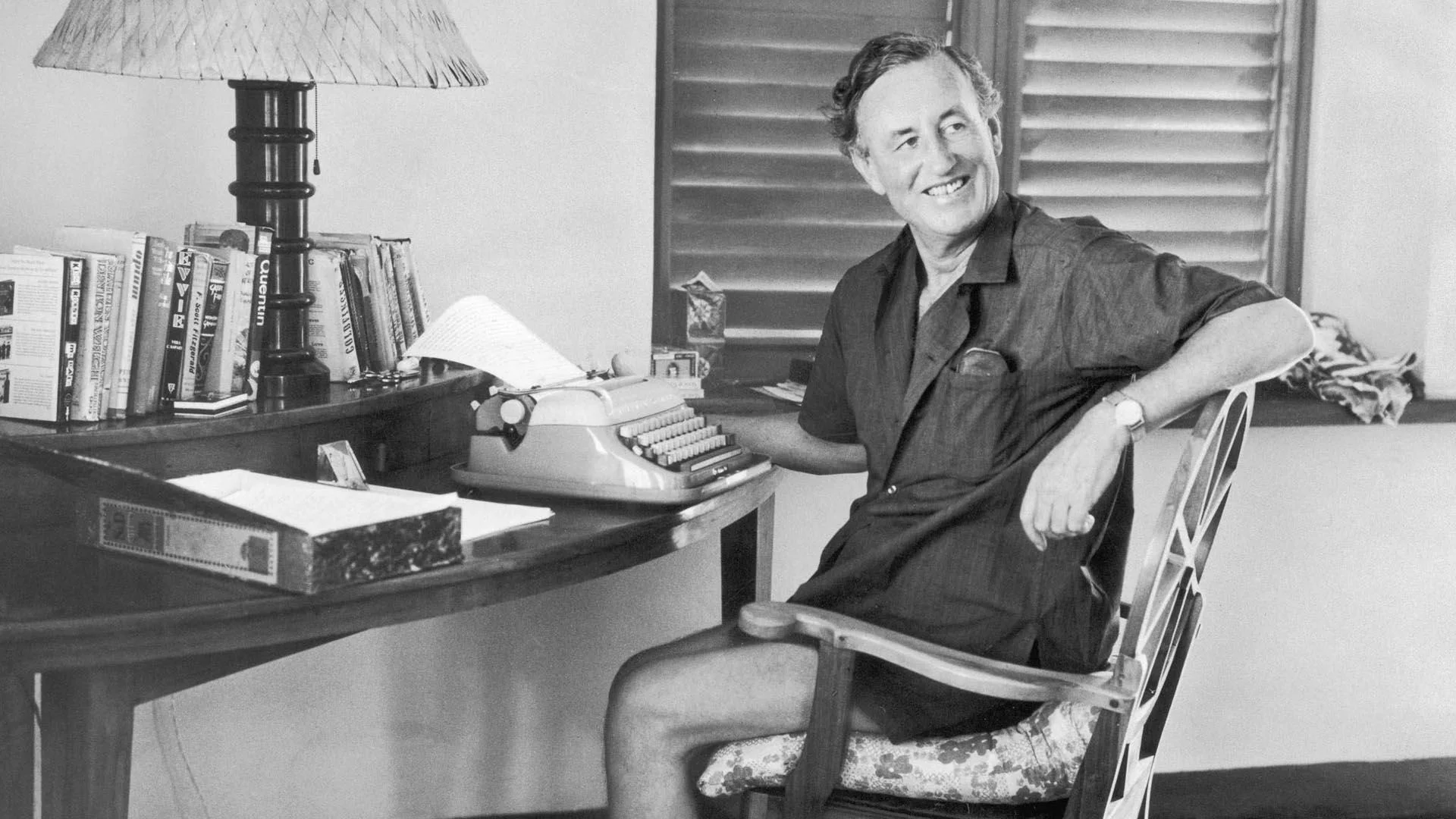
After the war, he decided to buy an estate in Jamaica which he named Goldeneye, and began writing his first James Bond novel.
The Welsh alcoholic was buried in Huelva as William Martin, a man who never existed. Curiously, it remains an enigma who leaves fresh flowers on the tombstone every now and then. Over time, it was discovered to be Isabel Naylor, the daughter of an English worker at the Rio Tinto Company Limited, who continued the tradition her father had started when she was 14.
Fleming was never a field spy or a liquidator, but he more than fulfilled his role as an intelligence agent in Spain: sabotaging any attempt by Franco’s regime to form a direct alliance with the Nazis—Operation Goldeneye. From his base in Lisbon or Gibraltar, the bachelor Fleming did not limit himself to informing his superiors of his progress; he also tried to seduce and be seduced by women, drank as many vodka martinis as he could (shaken, not stirred), and played roulette at the Estoril casino.
Later, he was put in charge of his own commando, the 30 Assault Unit, which blended brains with brawn. It was known as “Fleming’s Red Indians.”
After the war, he did the most important thing of his life: he bought an estate in Jamaica, named it “Goldeneye,” and created the most famous spy of all time: James Bond. There he finished Casino Royale, the first of the installments, which was a total sales success. To arm 007, Ian Fleming made a choice that was not accidental: the Walther PPK pistol, the same one Adolf Hitler used to commit suicide.
His mind never stopped developing intelligence plans, almost as another distraction. John F. Kennedy once admitted to him that he was a fan of the Bond novels. In return, the writer offered him a plan to overthrow Castro: dropping leaflets over Cuba claiming the “sexual impotence” of the Cuban leader.
Characters He Based James Bond, Agent 007, On
“The scent and smoke and sweat of a casino are nauseating at three in the morning. Then the soul-erosion produced by high gambling—a compost of greed and fear and nervous tension—becomes unbearable and the senses awake and revolt.” — First lines of Casino Royale.
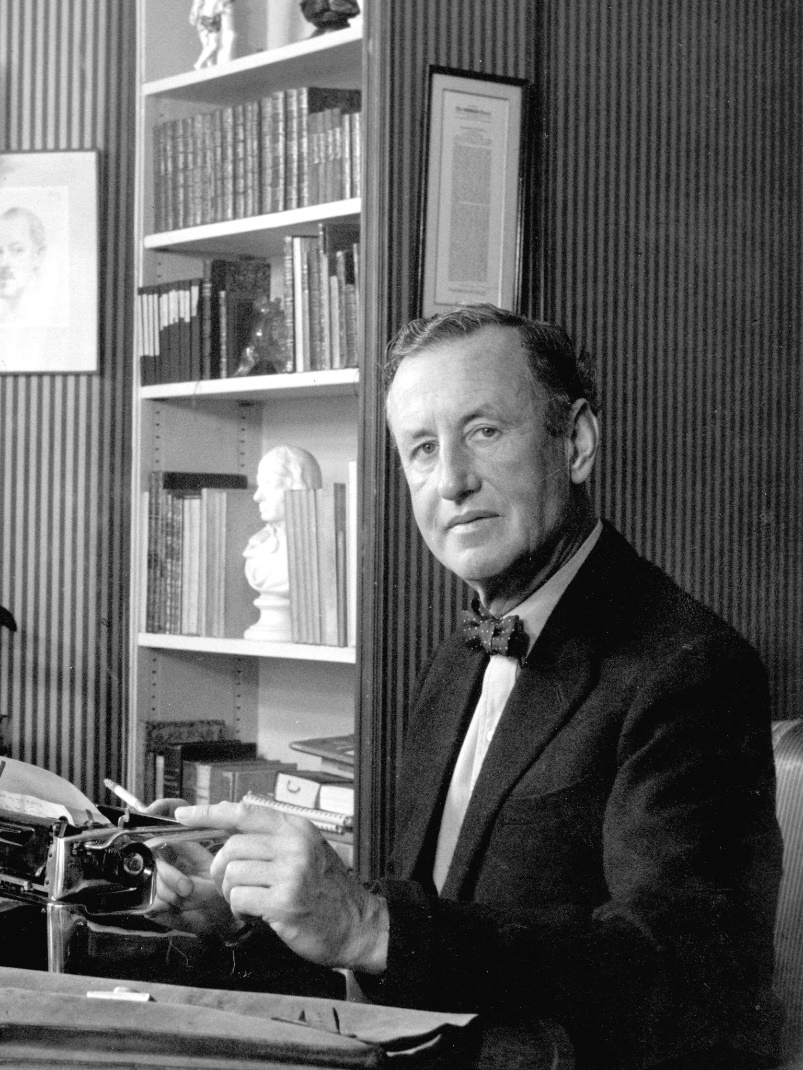
Fleming’s interest in writing a spy novel dates back to the World War II period, according to comments he made to several of his friends. It features fictional elements interspersed with his experiences during the conflict. On February 17, 1952, he began writing Casino Royale at Goldeneye.
Some time later, he explained that he had written the novel to distract himself from his imminent wedding to Charteris, who was then pregnant. Although his ex-girlfriend Clare Blanchard advised him not to publish the book or, at least, to do so under a pseudonym, Fleming continued with his intentions to distribute it and asked Joan Howe—mother of travel writer Rory Maclean and Fleming’s secretary at The Times, who partially inspired the character of Miss Moneypenny—to type the manuscript in London.
Upon finishing the first draft of Casino Royale, Fleming felt that “the element of suspense [in the plot] is completely absent” and told his friend William Plomer so when giving him a copy of the draft for his opinion. After reading it, Plomer considered the book promising and sent a copy to the publisher Jonathan Cape. Initially, they showed little enthusiasm for the novel, but Ian’s brother Peter—whose books were with the firm—convinced them to publish Ian’s. After two months of writing, Casino Royale was finally published in the United Kingdom on April 13, 1953, for the price of ten shillings and sixpence in hardcover, with a cover designed by Fleming himself. The success was such that three printings were needed to satisfy the high demand.
The novel centers on the exploits of James Bond, an officer of the Secret Intelligence Service (MI6) known by the code “007” and a commander in the Royal Naval Reserve.
Fleming took his character’s name from the American ornithologist James Bond, an expert on Caribbean birds and author of the guide Birds of the West Indies, of which Fleming—an avowed birdwatcher—had a copy. He explained to the ornithologist’s wife that “this brief, unromantic, Anglo-Saxon and yet so masculine name was just what I needed.” In an interview with The New Yorker in 1962, he detailed further: “When I wrote the first [novel] in 1953, I wanted Bond to be an extremely dull, uninteresting man to whom [in an instant] things happened; I wanted him to be a blunt instrument… while remaining immersed in the search for a name for my protagonist, I thought ‘By God, [James Bond] is the dullest name I’ve ever heard.’”
 Hoagy Carmichael, in his early 20s. Fleming took several of his physical traits when creating Bond.
Fleming based his creation on “secret agents and commando members” he met while in the Naval Intelligence Division at the time of defining the protagonist’s traits and appearance. Among them was his brother Peter, whom he adored and who participated in operations in Norway and Greece during the war.
Although he visualized Bond’s appearance in the likeness of actor David Niven, he later based it on the physique of Hoagy Carmichael. As noted by writer and historian Ben Macintyre, the author included several of his own traits in Bond’s physical description. The novels are full of references to the character’s “good, but at the same time dark and cruel, appearance.”
Other people who influenced the characterization of Bond were:
- Conrad O’Brien-ffrench, a spy he met while skiing in Kitzbühel in the 1930s;
- Patrick Dalzel-Job, a member of 30AU who participated in the war; and
- Wilfred “Biffy” Dunderdale, head of the Paris section of MI6, who wore hand-tailored suits and cufflinks and moved around the French capital in a chauffeur-driven Rolls-Royce.
- It is possible he also based him on Fitzroy Maclean, recognized for his work behind enemy lines in the Balkans.
- Duško Popov, an MI6 double agent. Fleming also gave his creation several of his own traits, including his taste for scrambled eggs, his love of gambling, his golf handicap, and the use of the same brand of toiletries.
After the publication of Casino Royale, Fleming used his annual vacation to go to his home in Jamaica and write another Bond story. Between 1953 and 1966, he wrote twelve novels and a couple of short story collections featuring the character, the last two—The Man with the Golden Gun and Octopussy and The Living Daylights—published posthumously. Most of the context for the stories comes from his work in the Naval Intelligence Division as well as from Cold War events he was aware of.
For example, the plot of From Russia, with Love uses a fictional Soviet decoding machine, a Spektor, as bait to lure Bond; this object is reminiscent of the Enigma machine used by the Germans during the war. The novel is based on the story of Eugene Karp, an American naval attaché and intelligence agent based in Budapest who took the Orient Express from the Hungarian capital to Paris in February 1950. Soviet assassins, who had boarded the train before it departed, drugged the conductor; Karp’s body appeared shortly after on the tracks in a tunnel south of Salzburg.
Fleming used the names of several people he knew for the characters appearing in the Bond stories:
- Scaramanga, the main villain of The Man with the Golden Gun, comes from an Eton schoolmate with whom he had a fight.
- Goldfinger, from the novel of the same name, was the surname of architect Ernő Goldfinger, whose designs he loathed.
- Hugo Drax, the antagonist of Moonraker, shares a surname with Admiral Sir Reginald Drax, an acquaintance of his.
- Drax’s assistant, Krebs, has the same name as Hitler’s last chief of staff.
- “Boofy” Kid, one of the gay villains in Diamonds Are Forever, takes the name of one of Fleming’s closest friends and his wife’s relative, Arthur Gore—8th Earl of Arran—whom his friends referred to as Boofy.
His first non-fiction work, The Diamond Smugglers, went on sale in 1957 and was based in part on the documentation process Fleming had carried out for his fourth Bond novel, Diamonds Are Forever. Much of the material had already been included in articles in the Sunday Times and came from interviews the author had held with John Collard, a member of the International Diamond Security Organization and formerly an MI5 worker. The reviews, both in the US and the UK, were mixed.
While the first five Bond books—Casino Royale, Live and Let Die, Moonraker, Diamonds Are Forever, and From Russia, with Love—received positive reviews upon publication, this trend changed in March 1958 when Bernard Bergonzi, in an article for Twentieth Century, attacked Fleming’s work, considering it to contain “a very marked streak of voyeurism and sado-masochism” and evidencing “the total lack of any ethical frame of reference.” The article unfavorably compared Fleming to John Buchan and Raymond Chandler, both morally and literally. A month later, Dr. No was published, receiving severe comments from critics who, according to Ben Macintyre, “turned practically in a pack against” him. One of the most unfavorable reviews came from Paul Johnson of the New Statesman, who called it “the filthiest book I have ever read […] By the time I was a third of the way through, I had to suppress a strong impulse to throw the thing away.” Although he recognized in Bond “a social phenomenon of some importance,” he stated that the novel contains “three basic ingredients, all unhealthy and thoroughly English: the sadism of a schoolboy bully, the mechanical, two-dimensional sex-longings of a frustrated adolescent, and the raw, snob-cravings of a suburban adult.” In his opinion, “Mr. Fleming has no literary talent, the construction of the book is chaotic, and incidents and situations are capsized in, and then forgotten.”
Fleming “plunged into a personal and creative decline” following troubles with his wife and the attacks on his work, as observed by Lycett. His next publication, For Your Eyes Only, consisted of a collection of short stories developed from sketches he had written for a television series that was never produced. In Lycett’s opinion, during the writing of these stories, “the sense of weariness and self-doubt was beginning to affect his writing,” which can be seen in Bond’s thoughts in that collection.
The Year 1961
In April 1961, shortly before the close of the second court case regarding Thunderball, he suffered a heart attack during one of the weekly meetings held at the Sunday Times. While still convalescing, one of his friends, Duff Dunbar, gave him a copy of The Tale of Squirrel Nutkin, a children’s book by Beatrix Potter, and suggested he write the story he used to tell his son Caspar every night. Fleming was enthusiastic about the idea and decided to write to his editor, Michael Howard, of Jonathan Cape: “There is not a moment, even on the edge of the grave, when I am not enslaved to you.” The result, Chitty-Chitty-Bang-Bang, was the only children’s novel written by Fleming, though it was not published until October 1964, two months after his death.
In June 1961, he reached an agreement with Harry Saltzman regarding the film rights to his novels and short stories, which included his future publications, plus a clause stipulating they must be made effective in less than six months. As a result, Saltzman created Eon Productions along with Albert R. Broccoli and, after a long search, they hired Sean Connery for five films, with Dr. No (1962) being the first. The way Connery played Bond affected the literary character; in You Only Live Twice, the first novel written after the premiere of the first film, the author gave Bond a sense of humor in the likeness of Connery.
Fleming published his second non-fiction book, Thrilling Cities, in November 1963; it consists of a collection of articles published in the Sunday Times in which he records his impressions of some cities he had visited between 1959 and 1960.
Producer Norman Felton approached him in 1964 with a proposal to write a spy series for television; Fleming agreed, providing several ideas, including the names of the characters Napoleon Solo and April Dancer for the series The Man from U.N.C.L.E.
However, he withdrew from the project at the request of Eon Productions, as they wanted to avoid any legal problems that might arise if this project overlapped with the production of the Bond films.
In January 1964, Fleming went to Goldeneye for the last time and wrote the first draft of The Man with the Golden Gun. Initially, he was not convinced by the result and considered rewriting it, but his editor, William Plomer, persuaded him otherwise.
Legacy
During his lifetime, Fleming sold around thirty million copies of his books, a figure that doubled in the two years following his death. In 2012, an original edition of Casino Royale was put on sale for £50,000, the same year the original editions of the rest of his novels were distributed.
The Times ranked him fourteenth on its list of “The 50 Greatest British Writers Since 1945,” published in 2008.
In 2002, Ian Fleming Publications announced the CWA Ian Fleming Steel Dagger award, presented by the Crime Writers’ Association, for the best thriller, adventure, or spy novel originally published in the UK.
As for his home, Goldeneye, it was acquired in 1976 by musician Bob Marley and, shortly after, Chris Blackwell did the same to build a luxury resort on the site, which preserves the author’s books and photos as a tribute to his legacy.
According to Keith Suter, “Fleming helped create unrealistic expectations of what intelligence agents can achieve: a single individual can save the world, at least in his novels. He created a new type of spy: ‘the super-spy.’ James Bond is a character of great bravery and patriotism. But he is also a person with an extravagant life, elegant hobbies, and possibly high private income (because no one living in London in the 1950s and 1960s could buy the luxury things he had on a public service salary).”
All the novels end with the villains being defeated, the world saved, and Bond emerging triumphant. They reassure readers that “the good guys” will win in the end. The Spy Who Loved Me (1962) differed from the rest of the Bond novels by relegating its traditional protagonist to a more secondary role and “took a risk that few novelists in his position would choose. His response to an internal impulse for novelty, and perhaps a desire for higher recognition, was to employ a completely different voice [from James Bond’s] and delay the appearance of his famous protagonist until after the midpoint of the story.” In the opinion of American writer Barry Eisler, “Fleming did not invent the modern spy novel (it is generally credited to his contemporary and countryman Eric Ambler), but his work was pioneering and popularized many of the elements that spy fiction devotees have demanded ever since.”
The film series, produced by Eon Productions—though there also exist a couple of films made outside Eon—did not cease after Fleming’s death either. The production company has financed more than twenty films about agent 007, with revenues estimated at more than six billion dollars worldwide, making it one of the highest-grossing in history.
Works
- Casino Royale (1953)
- Live and Let Die (1954)
- Moonraker (1955)
- Diamonds Are Forever (1956)
- From Russia, with Love (1957)
- The Diamond Smugglers (1957)
- Dr. No (1958)
- Goldfinger (1959)
- For Your Eyes Only (1960)
- Thunderball (1961)
- The Spy Who Loved Me (1962)
- On Her Majesty’s Secret Service (1963)
- Thrilling Cities (1963)
- You Only Live Twice (1964)
- Chitty-Chitty-Bang-Bang (1964)
- The Man with the Golden Gun (1965)
- Octopussy and The Living Daylights (1966)
DUŠAN POPOV, the Real James Bond
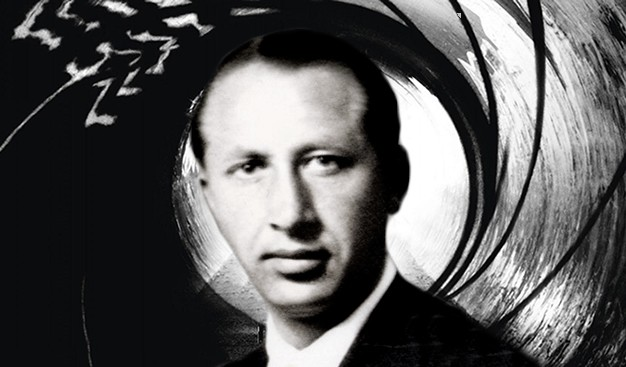
Dušan “Duško” Popov was a Yugoslav double agent who worked for MI5, the UK’s intelligence service, during World War II. He was a full-time gambler with a photographic memory, sharp intelligence, great culture, and an inescapable charm for beautiful women. He spoke German, English, French, and Italian and is said to have been the main inspiration for the James Bond novels written by Ian Fleming.
He was born into a wealthy family in 1912 in the area known today as Serbia. He had German friends in high positions and spoke the language fluently, but deep down, he despised the Nazis.
His career as a spy began at university thanks to his friend Johan Jebsen, who offered him a chance to join the Abwehr (the Nazi equivalent of MI5) as a double agent. However, Popov decided to inform a British passport control officer based in Yugoslavia about it, who recommended he play the part with Jebsen.
Dušan Popov’s primary role was to work with the Abwehr and inform the Germans of MI5-approved details about the Allies while providing the British with valuable information about the enemy’s plans. Over time, his code name became Agent “Tricycle,” and he decided to move to London.
In 1941, Dušan Popov was sent to the United States by the Abwehr to establish a new network in the US. He was given sufficient funds and a list of intelligence targets. While there, Popov contacted the FBI to explain what the Germans had asked him to do, but the then-head of the FBI, J. Edgar Hoover, distrusted Popov for being a double agent and decided not to report the facts. Months later, the attack on Pearl Harbor occurred, which could well have been prevented with the information provided by Dušan.
Popov was characterized by leading a playboy lifestyle while carrying out dangerous missions for the British during the war. He was the character any child would dream of being when they grew up: the typical spy who communicated in ultra-secret microdot code with invisible ink and infiltrated the most significant military events of those times—an agent who played at being both the bad guy and the good guy and who never went unnoticed by a beautiful woman: details that undoubtedly characterize Ian Fleming’s James Bond books.
Speaking of Ian Fleming, he worked for MI6 at the same time as Dušan and on one occasion followed him to a casino in Portugal. There, he witnessed how Popov made a $40,000 bet just to show off and make a rival withdraw from a game at a baccarat table—a typical French card game in casinos. There is no doubt why the first James Bond book was called Casino Royale.
In the post-war period, Popov was known for being a womanizer, continued to lead the extravagant lifestyle he was accustomed to, and had romances with some celebrities of the time, including the well-known actress Simone Simon. He died in 1981 at the age of 69, leaving a wife and three children.
SEAN CONNERY
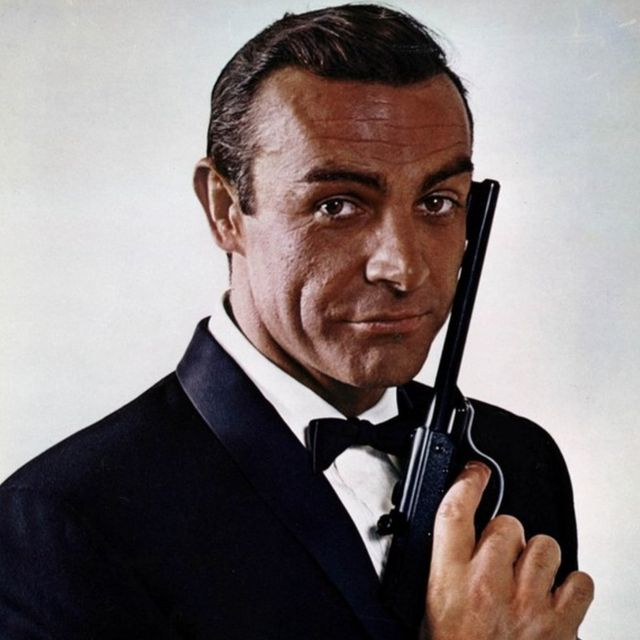
Thomas Sean Connery (Edinburgh, Scotland; August 25, 1930 – Nassau, Bahamas; October 30 or 31, 2020), known artistically as Sean Connery, was a British actor and film producer who won, among other awards, an Oscar, two BAFTAs, and three Golden Globes.
Much of his fame was due to his character James Bond, whom he played in seven films between 1962 and 1983 (six produced by Eon Productions, as well as Never Say Never Again, a remake of Thunderball produced by Warner Bros.). In 1988, Connery won the Academy Award for Best Supporting Actor for his role in The Untouchables.
His film career also includes movies such as Marnie, Robin and Marian, The League of Extraordinary Gentlemen, Indiana Jones and the Last Crusade, The Hunt for Red October, The Man Who Would Be King, The Name of the Rose, Highlander, Murder on the Orient Express, Dragonheart, and The Rock. Sean Connery was knighted by Queen Elizabeth II in July 2000. Connery has been polled as “The Greatest Living Scot.”
In 1989, he was proclaimed “The Sexiest Man Alive” by People magazine, and in 1999, at age 69, he was voted “The Sexiest Man of the Century.”
Information extracted from different digital and audiovisual media.