ENHEDUANNA
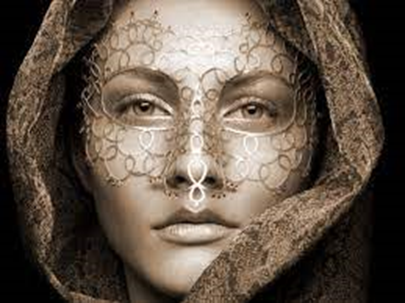
Enheduanna was a woman who lived in the 23rd century BC in ancient Mesopotamia, and she is widely considered the first person in history to create an original literary work.
She was a remarkable figure: in addition to a writer of prose and poetry, she was a princess and a priestess.
Her name, which was actually a title rather than a name, has been transliterated as Enheduanna, En-hedu-ana, or En Hedu Anna, and can have several interpretations.
“En” was the title designated for the high priest or priestess of Ur. In the Sumerian language, “Hedu” means ornament, and “An” means ‘sky’ or ‘heaven.’ The name given to her upon becoming a priestess, “Heduanna,” thus means “ornament of the sky,” so it is literally translated as “the high priestess, ornament of the sky.”
As “An” was also the sky god, the name has also been taken as “the high priestess of An (god of the sky).”
“Heduanna” (ornament of the sky) is a poetic epithet that pointed to the beauty of the Moon in the sky, interpreted in indirect reference to the Moon as “the high priestess of the ornament of the sky,” or in direct reference to the Moon as “the high priestess of the Moon.”
There are other interpretations. Her birth name is unknown.
Scholars in history and literature consider her possibly the oldest author and poet whose name is known, because in her poems and other works written in cuneiform on clay tablets, Enheduanna included her name. She wrote the first texts that can be attributed to the history of authored literature. She is also the only woman among the great authors of Mesopotamian literature. Her themes are religious: hymns to the god Nanna and his temple at Ur, and also to the goddess Inanna, protector of the Akkadian dynasty.
Literary Works
Enheduanna composed 42 hymns addressed to temples across Sumer and Akkad, including Eridu, Sippar, and Eshnunna. The texts have been reconstructed from 37 tablets from Ur and Nippur, most of which date from the Ur III and Old Babylonian periods. This collection is generally known as The Sumerian Temple Hymns. The temple hymns were the first collection of their kind; in them, Enheduanna states: “My king, something has been created that no one has created before.” The copying of the hymns indicates that these temple hymns were used for a long time after Enheduanna’s death and were held in high esteem. The Sumerian Temple Hymns are considered one of the first attempts at a systematic theology.
Her other famous work is the Exaltation of Inanna or Nin-Me-Sar-Ra, which is a personal devotion to the goddess Inanna and also includes details of Enheduanna’s expulsion from Ur.
Furthermore, scholars like Hallo and Van Dijk suggest that certain unattributed texts might also be her work.
The authority of Enheduanna raises the subject of female education in ancient Mesopotamia. It is known that wives of kings commissioned poetry or perhaps composed it themselves, and the goddess Nidaba is credited with acting as a scribe. As Leick points out: “To some extent, the descriptive epithets of Mesopotamian goddesses reveal the cultural perception of women and their role in ancient society.”
MARY SHELLEY
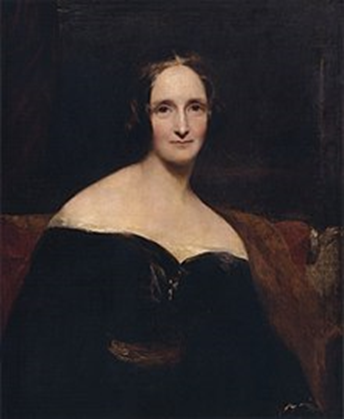
“I do not wish women to have power over men; but over themselves.”
Daughter of the philosopher William Godwin and the writer and feminist Mary Wollstonecraft.
A few days after her birth, her mother, who had written A Vindication of the Rights of Woman, died of puerperal fever.
As a child, she would escape to St. Pancras Churchyard, where her mother was buried. She learned to read over her mother’s grave. Her father used to accompany her along with her half-sister Fanny, and they practiced reading from the tombstones.
In 1814, at sixteen, Mary left her home and her country with the poet Percy Bysshe Shelley, with whom she had begun a relationship despite him being married. The couple traveled to France and Switzerland.
The poet’s wife, humiliated, offended, and pregnant, followed the happy couple to La Spezia, a town on the Italian coast where they settled. To the predictable turmoil of such a situation was soon added Lord Byron himself, always fond of all kinds of disorder.
They married in 1816, after Shelley’s first wife took her own life by drowning. From this union, Mary had several pregnancies, but only one child managed to survive: a son, little Percy Florence. Percy (the father) died before turning thirty in a storm while sailing. His body was cremated, but before it was, his heart was removed. Mary wrapped it in a page of poetry and kept the relic for a quarter of a century, until the date of her own death.
Frankenstein; or, The Modern Prometheus
Creator of the book that inaugurated science fiction and which today still stands as one of the great horror stories of all time; in 1818, she published her first and most important work, the novel Frankenstein; or, The Modern Prometheus.
The birth of this work was due to a wager. The night of June 16, 1816, has gone down in history as the “year without a summer.” The eruption of Mount Tambora in Sumbawa (Indonesia) on April 10, 1815, released tons of sulfur dust that spread across the planet, causing a lasting cooling that altered the agricultural cycle and produced famines. These effects were felt even in Switzerland. There, in Cologny, near Lake Geneva, in an elegant mansion called Villa Diodati, a group of friends from England had settled that summer: the poet Percy B. Shelley; his then-lover, Mary Godwin; the famous writer Lord Byron; his physician and personal secretary John Polidori; and Claire Clairmont, Mary’s stepsister.
As true romantics, the residents of Villa Diodati loved nature, were fascinated by the advances of science, and adored Gothic horror stories. Because of the weather, they were forced to stay indoors for long periods and became fond of spending their evenings reading horror stories. “Incessant rain confined us to the house. Some volumes of ghost stories fell into our hands […] They are as fresh in my mind as if I had read them yesterday,” Mary would recall years later.
They also discussed the advances of a science that, at the time, still had a certain magical tinge. They were particularly fascinated by scientific experiments linked to electricity, like those of Luigi Galvani, consisting of moving a frog’s legs by means of an electric discharge, as well as Erasmus Darwin’s speculations on the possibility of returning life to dead matter through electric impulses.
Thus, amidst ghost stories, experiments, and readings, the confinement bore generous fruit the day Lord Byron proposed that each member of the group write a horror story. This was done, and the result was two masterpieces of fantastic literature: The Vampyre by John Polidori—the story of a seductive aristocrat who drains the blood of all the women who fall into his nets, a precursor to Bram Stoker’s Dracula (1897)—and Frankenstein by Mary Shelley.
This work is an achievement more than remarkable for an author only twenty years old, immediately becoming a critical and public success. The story of Frankenstein, a student of the occult, and his subhuman creature created from human cadavers, has been adapted for theater and film on several occasions. In 1831, she completely rewrote the story to achieve the definitive version that has reached us today.
Literary Works
She did not achieve such popularity with any of her later works or the excellence of this first one, despite writing four other novels, several travel books, stories, and poems. Her novel The Last Man (1826), considered the best of her production, narrates the future destruction of the human race by a terrible plague. Lodore (1835) is a fictionalized autobiography. Additionally, she wrote biographies of figures from Spain, Portugal, and France.
Following her husband’s death in 1822, Mary dedicated herself to promoting the poet’s work. She published his Posthumous Poems (1824) and edited his Poetical Works (1839) with valuable and detailed notes.
Passing
Mary Shelley died in London of a brain tumor while sleeping, on February 1, 1851. Her final wish was to be buried alongside her parents. They rest in St Peter’s Churchyard, Bournemouth.
EMILIA PARDO BAZÁN
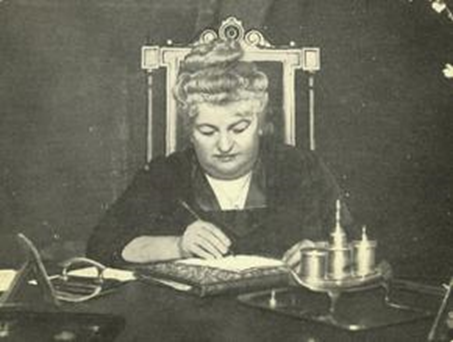
“If my card said Emilio instead of Emilia, how different my life would have been.”
Emilia Pardo-Bazán y de la Rúa-Figueroa was born in A Coruña on September 16, 1851. She passed away on May 12, 1921, in Madrid.
She was a writer and a defender of feminism who, using her gift for writing and communication, sent a message in defense of women’s rights.
Education
Daughter of the Counts of Pardo Bazán, she was educated at home with the best teachers. From a very early age, she demonstrated her love for literature and writing, beginning to write short stories at barely 10 years old. One of her first novels, Aficiones peligrosas (Dangerous Hobbies), was written when she was only 13. This novel was published for the first time in Spain in 2012.
As a girl, she refused to “study” what her gender dictated, such as music and domestic economy. Her training was based on languages, literature, history, and philosophy. Although she wanted to go to university, she could not as it was forbidden to women in late 19th-century Spain. She made books and her friends her own university.
She married José Quiroga y Pérez Deza, also an aristocrat, at age 16. For years, both families traveled through Spain, where Pardo Bazán absorbed the situation of women and her own country.
Beginnings
She moved to Madrid when the family was relocated because her father was named a Deputy of the Cortes. Following the entry of Amadeo of Savoy and the Carlist War, the whole family emigrated to France, which led her to discover the literature that marked her so deeply. From these years emerged one of her first publications in the newspaper El Imparcial. Later, she grouped all her chronicles into one of her travel books, Por la Europa católica (Across Catholic Europe). In it, Emilia Pardo Bazán advocated for Spain’s need for Europeanization.
Between 1879 and 1882, she published her first novels, Pascual López, Un viaje de novios (A Honeymoon), and La tribuna. Alternating her novels, Emilia Pardo Bazán began to write for the magazine La Época articles about Émile Zola and the experimental novel. She gathered all these articles in 1883 into a new volume, La cuestión palpitante (The Burning Question), which catapulted her as one of the main promoters of Naturalism in Spain. This collection of articles had a great social impact. The scandal generated by its publication led her husband to ask her to stop writing, which provoked the separation of the marriage.
She continued writing essays in the following years, always bridging literature with French trends.
After several years dedicated to studying this vein, she launched her masterpiece of the naturalist method, Los pazos de Ulloa (The House of Ulloa). In it, she exposes the decadence of the Galician rural world and the aristocracy.
Evolution of Her Literature
From 1890, Emilia Pardo Bazán left Naturalism behind and explored Idealism and Symbolism. Now separated from her husband, the writer continued meeting with and being nurtured by the intellectuals of the time and artistic trends. Her work began to have a clear feminist component in a tireless struggle for the social and intellectual emancipation of women.
After the publication of essays like La mujer española (The Spanish Woman), she was invited to participate in conferences, making friends and enemies in equal measure. The most chauvinistic section of intellectuals and aristocrats did not look kindly upon the admiration a woman could inspire through her literary gifts.
Almost simultaneously with her divorce, Emilia Pardo Bazán’s father passed away, shifting this new vein in her work even further toward Spiritualism and Symbolism. Works from this stage include Una cristiana (A Christian Woman), La piedra angular (The Cornerstone), and Dulce sueño (Sweet Dream). In them, she addresses themes such as religion, the life of the time, family duties, and even relationships between lovers. Additionally, she began writing short stories—more than 500—such as Cuentos de la tierra (Tales of the Land) or Cuentos sacro-profanos (Sacred-Profane Tales).
Women’s Equality
Emilia Pardo Bazán’s work and life always had a strong feminist character. She yearned to equalize the rights and opportunities of men and women, so that her voice and thought would be equally valid.
She proposed Concepción Arenal and Gertrudis Gómez de Avellaneda to the Royal Academy of Language, both proposals being rejected, despite her being considered, alongside Clarín and Galdós, as the greatest exponent of Realism.
In 1906, she became the first woman to preside over the Literature Section of the Ateneo de Madrid, as well as the first woman to hold a literature chair at the Central University of Madrid (despite university education being forbidden to women). She had to suffer the boycott of students and faculty, remaining alone in most of her classes. Furthermore, she was named a Councilor of Public Instruction by Alfonso XIII.
Hers is one of the most important and perhaps most unknown books of Spanish feminism, La España moderna.
Passing
Emilia Pardo Bazán died on May 12, 1921, due to a complication of her diabetes. After her death, the entire Spanish press praised the writer’s merits—merits that she saw trampled upon by part of society during her life simply for being a woman.
AGATHA CHRISTIE
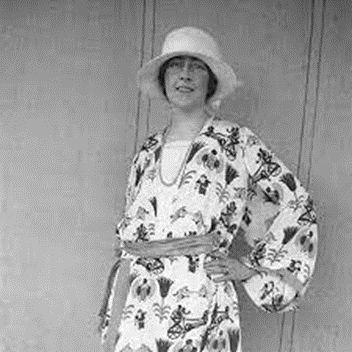
“The impossible could not have happened, therefore the impossible must be possible in spite of appearances.”
Biography
Her parents: her mother, Clara Boehmer, and her father, Frederick Alvah Miller.
Both insisted that their daughter receive a home education and took charge of teaching her to read, write, and solve basic arithmetic operations. Although her mother believed that children should not learn to read until the age of eight, Agatha learned at four. She was also instructed in music, learning to play several instruments such as the guitar and the mandolin.
She was fascinated by Sherlock Holmes, and her mother read her Gothic and detective literature. She was very good at mathematics, which explains why she chose detective fiction—it being a collection of riddles that must be solved through clues.
On the South Coast of Devon, Agatha is omnipresent because it was there that she had a happy childhood at the end of the 19th century. Agatha Mary Clarissa Miller was born on September 15, 1890, the third descendant of Clara Boehmer and Frederick Alvah Miller.
She loved trees and playing in the garden; she was raised in a relatively wealthy family. She did not go to school, receiving her first education at home; perhaps that is why she thought differently. When she was old enough, she began to attend dances and parties; she loved skating on the pier. She studied music and French in Paris, something common for young ladies of that era, although she was never good enough.
Her mother presented her as a debutante in society, in Egypt. She was a person of courage and had time and great impulses to travel; in 1911, she boarded an airplane for the first time.
Continued in the article dedicated exclusively to her: