 “At the scene of the crime, everything must be looked at under the microscope”
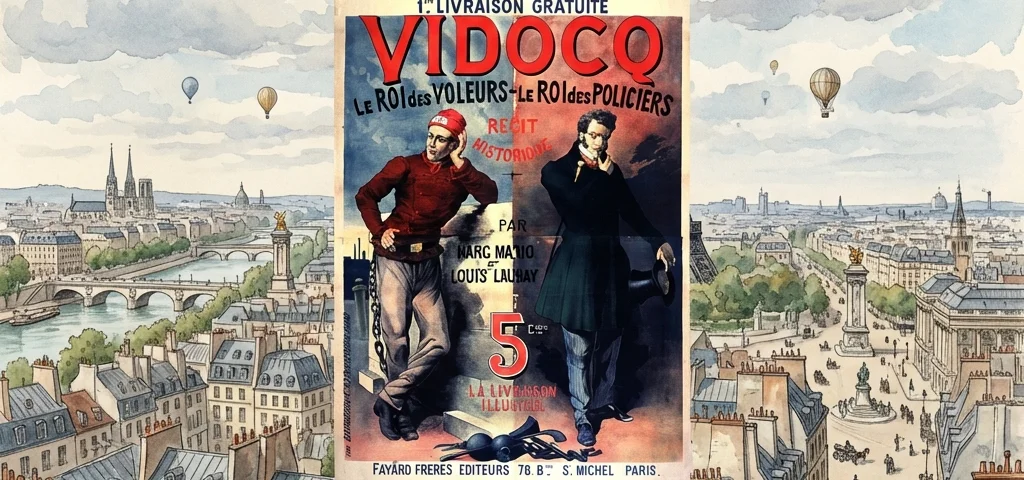
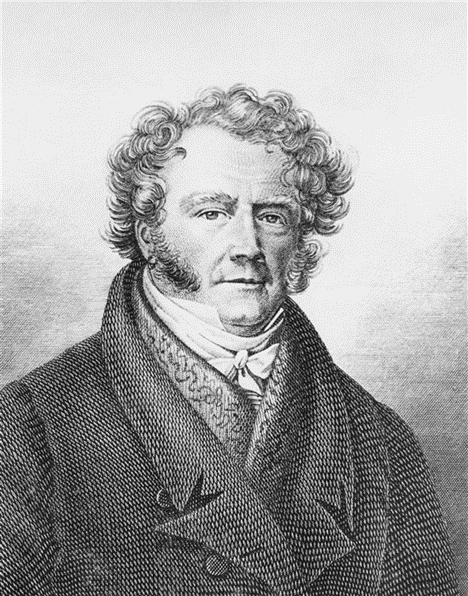
Born in France, in the northern city of Arras, Eugène-François Vidocq was both a character and a person. The person Vidocq was a criminal turned policeman who wrote his memoirs, and the character Vidocq became a legend that inspired countless stories brought to literature (by Victor Hugo among others) and later to the cinema.
He was the third of seven children of a baker. The young man rejected the education his father could offer him, preferring to spend his time romancing women and dueling for often frivolous causes. An excellent swordsman, he usually emerged unscathed from his duels, in which he only caused a few scratches to his adversaries. Young Vidocq’s life revolved around his two main hobbies: women and fencing, which he alternated with minor thefts and all kinds of small crimes. At age 15, he stole 2,000 francs from his father’s safe with the intention of fleeing to the United States, but after the robbery and a night of drinking, Vidocq’s accomplices stole the loot from him and fled.
He enlisted in the army, fighting in the battles of Valmy and Jemmapes. But given his undisciplined character, he did not last long in the military. Throughout the two years he was enrolled, he had no fewer than twenty duels, as a result of which two of his rivals lost their lives. Becoming a deserter, he crossed over to the Austrian ranks, but he also had to flee to avoid being beaten. Seeking refuge in Belgium with false papers, Vidocq joined a gang of outlaws who, under the pretext of hunting counter-revolutionaries, only dedicated themselves to appropriating others’ property. As expected, he was arrested and imprisoned in the Lille prison.
From Criminal to Policeman
In 1809, at 34 years of age, Vidocq’s life took a radical turn. According to some historians, while he was in prison in Toulon, three criminals murdered another prisoner and accused Vidocq of the crime. He decided to escape from prison and managed to kill two of the prisoners who had accused him, but as he was about to murder the third, he was caught in Lyon. After being captured, Vidocq requested to be brought before Commissioner General Dubois, who agreed to the interview, intrigued by the prisoner’s fame and popularity. Vidocq told him that he had decided to change his life radically and wanted to join the police. Commissioner General Dubois, tired of hearing similar stories from other prisoners, turned to leave; as he was about to walk away, Vidocq made an extraordinary proposal: “Now two gendarmes will take me to prison, immobilized with shackles. If I manage to escape on the way and return, it will be proof of my good faith.”
Dubois, amused by the proposition, accepted the challenge. Two expert and strong guards handcuffed Vidocq to lead him to prison, but fifteen minutes later, Vidocq appeared in the Commissioner General’s office, free and satisfied. He had managed to escape his guards to keep his word. Convinced, Dubois accepted the deal and offered the criminal amnesty. Vidocq also kept his part: in less than 15 days, most of the criminals in Lyon began to fall and be imprisoned.
After a year of close collaboration, the police themselves arranged for Vidocq’s “escape” so that he could continue his work, this time outside of prison. It was at that moment that the legend of the chameleonic Vidocq began. The former convict learned the art of disguise and adopted countless different personalities. He played his characters so well that he was once hired to kill himself. His unorthodox methods earned him both admirers and detractors among the police officers themselves.
Vidocq and Criminology
In 1811, Vidocq created the well-known Brigade de la Sûreté (Security Brigade), a group of secret agents whose mission was to infiltrate various criminal groups and gather information so that they could be arrested or their plans thwarted. Given its enormous success, the following year the Brigade was established as an official police force, and Vidocq was appointed its head.
Over the years, this police force was composed of very diverse people. Many of its members were former criminals, but there were also police officers, investigators, doctors, and even beggars who knew the city and its inhabitants well.
It was Vidocq himself who instructed his agents on how to infiltrate the various criminal groups scattered throughout the city, teaching them the art of disguise, everything they needed to know about the gangs they were penetrating, and even how to speak and behave in certain environments. All these contributions made Vidocq the “father” of modern criminology, as he employed methods unknown until then, reformed the police, and reduced crime rates in Paris during the years he led the French security forces.
By 1813, crime in Paris had decreased by 40%. That same year, Napoleon put him in charge of the state’s security services.
Expelled from the Police and Founding His Own Agency
In 1832, Vidocq fell into disgrace after being accused of instigating a crime during the Bonapartist movements and was forced to leave the police. The following year, he founded the first private detective agency in history, known as the Bureau des Renseignements (Office of Information), where he eventually had several detectives under him, some of whom came from the criminal world. He amassed a great fortune, as his efficiency was nearly one hundred percent.
Years later, in 1842, the police arrested Vidocq, accusing him of an illegal arrest and of stealing funds in an embezzlement case he himself had helped solve. After being sentenced to five years in prison and a fine of 3,000 francs, Vidocq appealed and was acquitted.
Pioneer in the Field of Criminal Investigation
It is often said that the Scotsman Allan Pinkerton was, in the 1850s, the founder of the first detective agency in history, known as the Pinkerton Agency, but the truth is that the mysterious Eugène-François Vidocq anticipated him by several years.
Vidocq is credited with many advances in the field of criminal investigation, introducing ballistics studies, the recording and creation of files with case investigations, and criminology itself. He was the first to use molds to collect footprints from a crime scene. His anthropometric techniques would have a great impact.
Influence on Authors
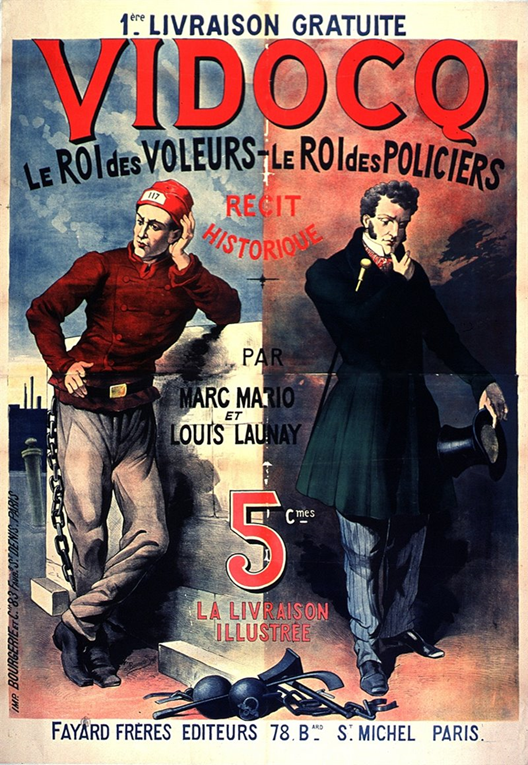
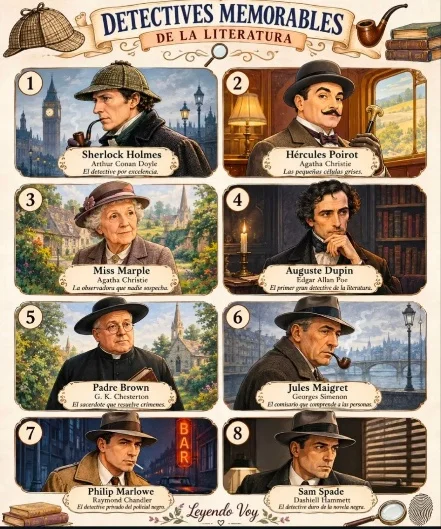
It is thought that Edgar Allan Poe was inspired by him to create the detective C. Auguste Dupin in 1841. He would also be the inspiration for Émile Gaboriau when creating the character of the detective Monsieur Lecoq, an investigator characterized by his constant use of the scientific method. Again, he would be the reference for Jacques Collin (Vautrin), a recurring character in many of Balzac’s novels.
In The Enigma of Paris by Pablo de Santis, the character Darbon possesses a collection of Vidocq’s biography. Traits of Vidocq can be attributed to this character.
Regarding Les Misérables, Victor Hugo confessed that he had been inspired by Vidocq to create the two main characters, Jean Valjean and Inspector Javert.
Vidocq the Novelist
During his last years of life, Vidocq wrote several novels inspired by his time in the police. Some historians believe that he received help from his friend, the writer Honoré de Balzac, to do so. When his wife, Fleuride, died in September 1847, he retired and definitively closed his detective agency, although he occasionally continued to collaborate on some cases with the police.
In April 1857, Vidocq suffered paralysis at his home in the Marais district of Paris, and the famous thief-turned-detective died on May 11, 1857.