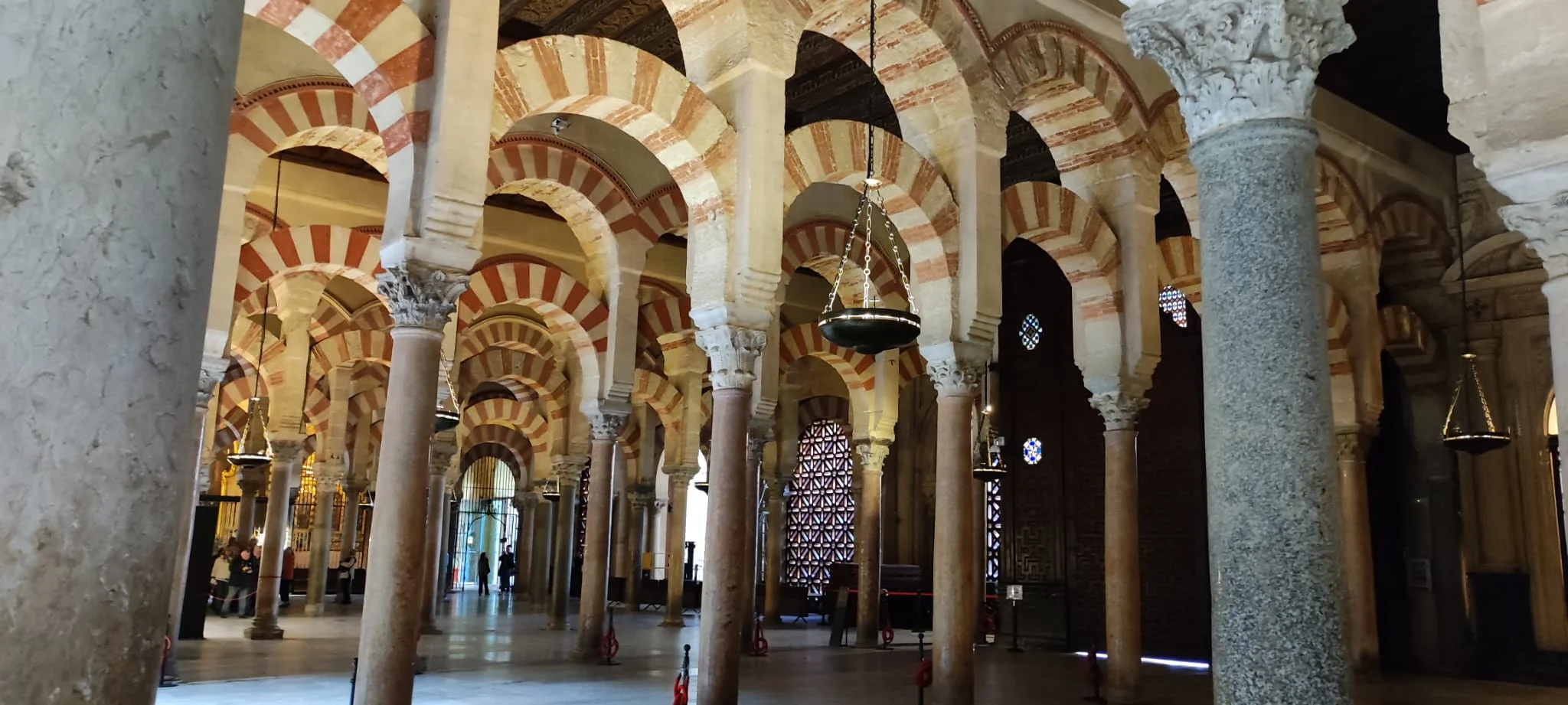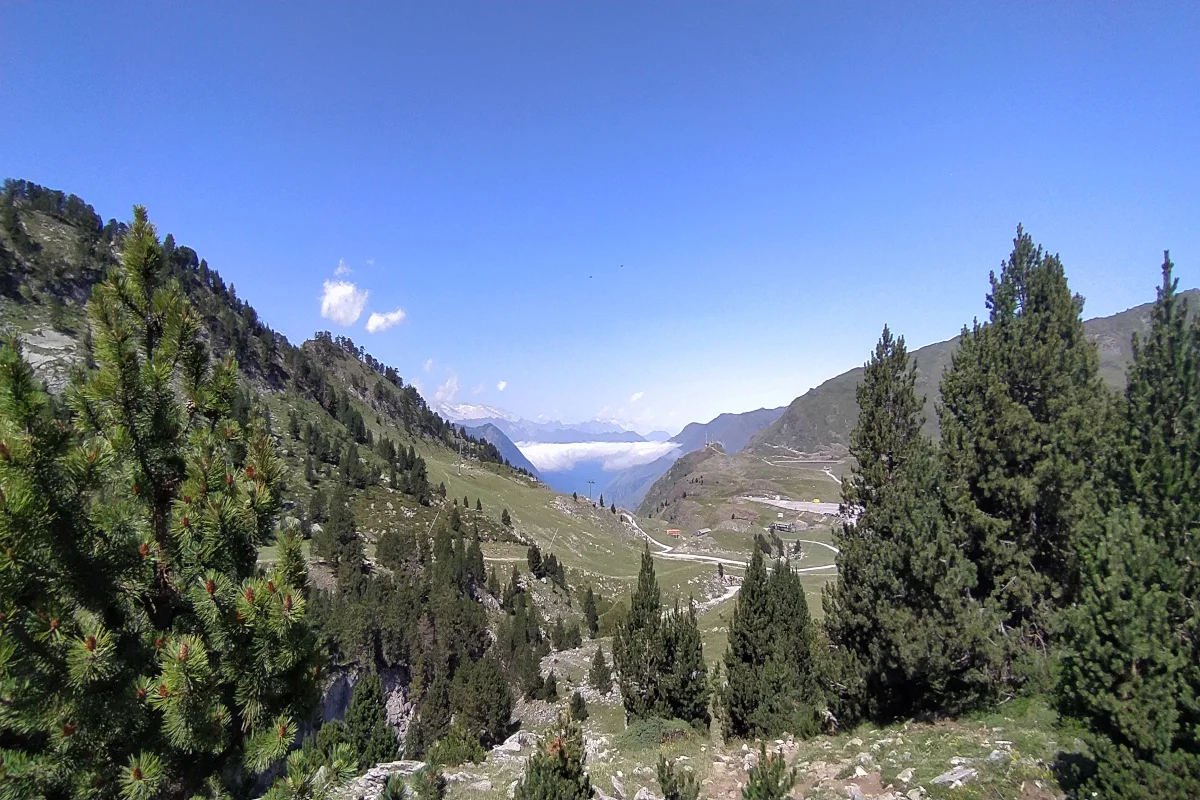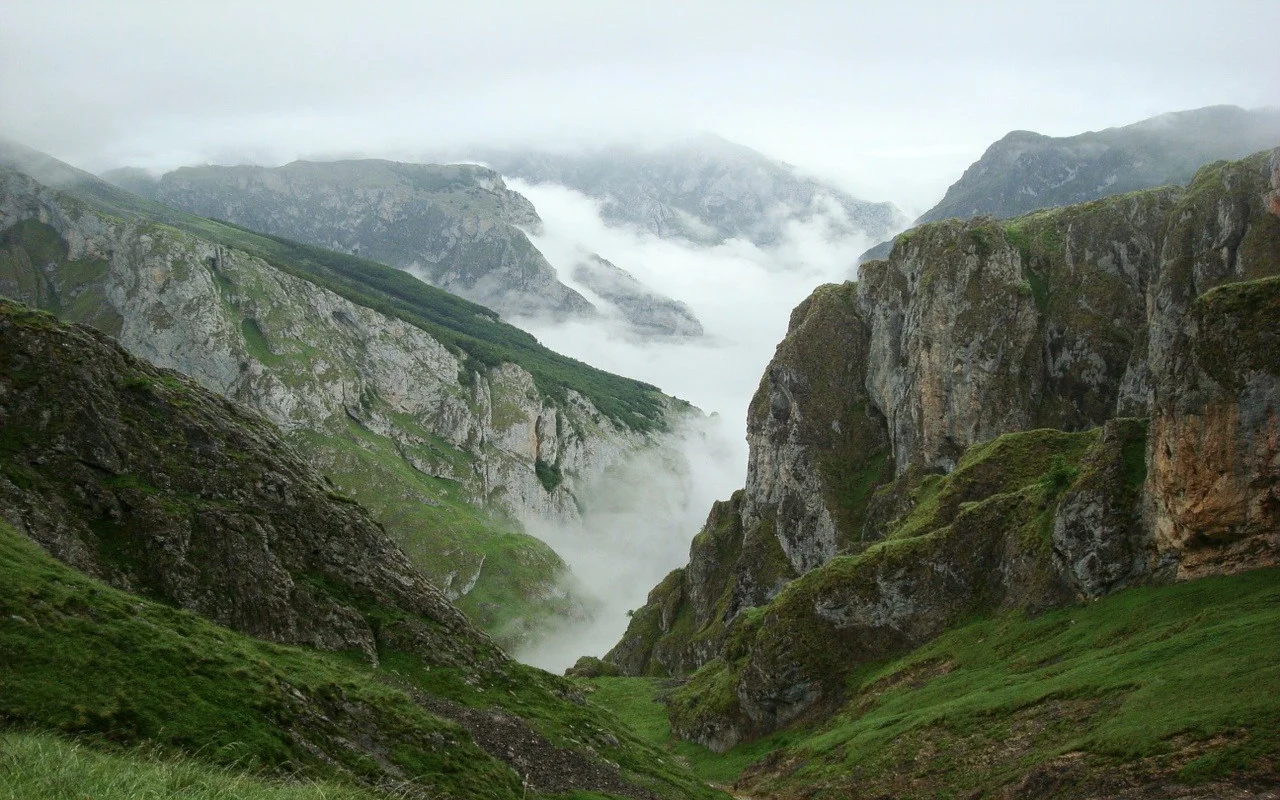
The journey to Asturias was tremendously long but incredibly beautiful. From Córdoba, the landscape shifted constantly: from olive groves and sunflowers and wide plains of poppies or grain, until reaching the North, which felt like entering Ireland—full of greenery and moisture, with leafy trees forming forests, rivers crossing the paths, flowers, and lakes. Normally they made two stops before arriving: one near Madrid and another a bit further along. For Rafa, the Asturian lands meant relaxation, escape, and magic.
His heart and soul were divided in two. One part was in Córdoba, where he had been born and raised—that great city unknown to many and which had nothing to do with the one Lorca cited in his verses, “Córdoba, distant and alone.” Nowadays, it was neither alone nor distant; it was well-located and connected by train to all of Spain since 1992 because of the Expo, except for the North, though that was up to the State. However, his other half was in Asturias, his place of rest and vacation retreat.
His mother always told him that when she was first stationed in Córdoba, she had the false idea that it was hot all year round; she never imagined it had such extreme climates. If the frigid cities of northern Spain only said they had two seasons—the train station and winter—Córdoba didn’t enjoy the usual four either. They had two transitional seasons: one usually in March and another in September, sandwiched between cold months and even hotter ones.
The people of Córdoba had an open character, yet were very class-conscious and hardworking. Everything Elena had heard about Andalusians until then was a total cliché. Even so, she yearned for her “beloved homeland,” her Asturias. She felt morriña—that longing felt only by those away from their land. She missed her praus (meadows), the cows, the hórreos (granaries) of some houses, the winding mountain roads, the preñaos (chorizo-filled bread), her cider, the fabes (beans), the Virgin of Covadonga, the admired figure of Don Pelayo, the local festivals, the bagpipes, the beaches there, the church of San Lorenzo, and above all, the wood-fired oven in her mother’s kitchen that gave such a special flavor to the meals of what had been her home.
Those wonderful trips had now become long journeys, all due to his parents’ divorce. His mother remained in Córdoba for him; in a way, it made him feel responsible, though she never mentioned it. Only once, when asked why she didn’t return to her land, she replied that it was because of her son’s roots with friends and his father’s family—so the divorce process would be much easier for him, and so his father could see him at any time without hindrance. It was a strange situation: they loved and respected each other but couldn’t live together. Neither had dated anyone else; it was as if, deep down, they held a halo of hope for a reunion. However, for Rafa, that situation was preferable to the daily arguments that occurred at home before they decided to separate.
They were already arriving in Avilés and from there to the council—a group of houses isolated and separated by land. A highway had been built, which had resulted in his grandparents’ land being partially expropriated, giving them a derisory and symbolic amount compared to its real value. Some other neighbors had their houses expropriated because the route crossed right through them, so they received a new one nearby to avoid disrupting their lives too much.
It seemed he could already smell the empanada and the preñaos his Güelita (Grandmother) made every time he visited. It was only his imagination, because for now, the only thing his sense of smell recognized was the scent of the cows grazing in the prau near the house, breaking the silence with their lowing. They entered the garden, parked the car in the garage built on the ground floor, where they also kept toys from when he was younger, his mother’s bike, his uncle’s surfboard, packaged food, and much more…
Pelayo, the great Mastiff, went to greet them, running alongside the car. He was a beautiful dog with a white coat, a large snout, and paws proportional to his size. He wagged his tail incessantly; he had so much strength that if there had been any object in the path of his tail’s movement, he would surely have knocked it over. He didn’t stop barking, demanding attention. Rafa loved him dearly. His mother had taken him to the Güelita’s house just when she received notice that her post was Córdoba; Don Pelayo was still a puppy then. Elena felt much more at ease knowing they had a Mastiff to protect them. There he was, licking his face, his front paws resting on Rafa’s shoulders—he was bigger than Rafa when he stood up, but Rafa loved it.
The Güelita also went to meet them. She was a tall woman of strong build, broad-shouldered and wide-hipped. Her skin was very pale with rosy cheeks, her eyes were brown, and she gave off a sweet scent that mixed with the aroma of clean clothes. She had spent her entire working life running a small haberdashery in Avilés while raising her children, who would go to the shop after school—until Elena was old enough to stay home after high school and look after her younger brother, Iván. The Güelito’s work schedule was very complicated; he worked in the mine, and although he had retired early, his lungs didn’t withstand life’s trials, and he passed away when his grandson Rafa was still small, though Rafa remembered him with great affection. Mother and daughter merged into one of those soulful hugs, while Pelayo continued licking Rafa’s face with his damp tongue, leaving him covered in drool, but he didn’t mind one bit.
“Pelayo, leave the güaje (boy) alone!” the Güelita ordered.
“Leave him, Mom; don’t you see Rafa enjoys those licks as much as Pelayo does?”
Elena went to get the luggage from the trunk, but Don Pelayo got in her way. After all, he hadn’t greeted her yet; he was, above all, a formal and family-oriented dog. He leaned against her legs, letting all his weight fall as if he were still a tiny puppy, with the difference that he now weighed about seventy kilos—a detail not in his canine consciousness.
“You’re going to knock me over, Don Pelayo! Yes, you’re very handsome and I’ve missed you. Come on—” Elena tried to dodge him and grab the luggage, finally succeeding. The three of them went up the stairs that connected to the house. Originally there was only an exterior staircase, but Elena convinced her parents before leaving to build an internal one, so on rainy days they wouldn’t have to go outside unless they were heading to the street.
“Have you made me the preñaos, the empanada, the carbayones, and the beef carpaccio?”
“Hey, do you think your grandmother is in the kitchen all day or what!”
“Go on… leave it. Look, today I’ve made you the preñaos and the empanada—” she looked at him with all the love a grandmother can give a grandson she sees less than she’d like, while smiling.
Rafa’s heart, like his Güela’s, was bursting with happiness.
“I’m sorry, I didn’t mean to pester you,” he showered her with kisses and hugs.
“Don’t worry, cielín (little sky); you’ll eat whatever you feel like.”
Elena looked at them both, smiling. “You spoil him too much, Mom.”
“And if you were here, I’d spoil him every day.”
“Mom… don’t start with the hints.”
“That job of yours that sent you so far from me.”
The Güelita turned around so her daughter wouldn’t see the expression of sadness and anger on her face. Elena approached from behind and hugged her, resting her head on her mother’s shoulders. “Don’t be like that; don’t make it harder for me.”
“This country owes me a lot, let me tell you. My daughter at its service, taking care of the rest of the citizens so they can enjoy themselves and be safe. They don’t thank you, and they make you look terrible on the news.”
“Don’t believe everything, Mom; we’re the most valued corps. You don’t get rich with this profession, nor do you look for fame. You have to feel a vocation; it must be part of you.”
Rafa watched the scene in awe. He felt very proud of his parents, although he never said it. Both had been decorated years ago when they were still married; the Güelos had come down to Córdoba for the tribute. Rafael went to get them from Seville to pick them up at the airport and take them home. They loved that house; it was a typical Andalusian house with an interior courtyard decorated with Andalusian-style tiles, full of flowers and pots, with a fountain in the center that cooled the air—the murmur of the water made your problems seem trivial. They would sit at the courtyard table tasting lemon granita with cracked olives seasoned with garlic. Elena had always lived in houses, so she was used to living that way. However, housing in Córdoba was very expensive, especially for a house in the heart of the historic center. But that house had belonged to the paternal family, so they only spent the cost of the renovation and little else. For this reason, when they decided to separate, she decided to leave, taking her son to what was now to be their new home. It was close enough that he didn’t have to change schools and could keep his friends. Rafael gave her the option of staying there, but it didn’t seem right to Elena. He couldn’t figure out what had happened for them to end up like that.
The aroma of coffee made by the Güela brought him back to reality. She handled the cups with great care, though there was one in particular she treated with more delicacy and affection than the others; it had belonged to the love of her life. From time to time, she looked at the cup and tears appeared in her eyes, ready to overflow but never quite doing so. Rafa stood up and hugged her as warmly as he could.
“Oh… the güaje! Come on, sit down and I’ll get you a snack.”
They finished their snack, and Rafa went to watch television. Nothing interesting was on, so he turned it off and focused on watching trap videos on YouTube. He tried to listen to them with headphones because his parents said they reminded them of “work clients.” They didn’t understand what was popular now. He decided to go to bed; he would play Fortnite, of course, via his smartphone. That game saved him more than once from boredom. He hardly had any friends there, except for the neighbor’s grandson, but they had to coincide. He decided to ask, raising his voice, though the answer was negative.
He fell asleep playing the game. When he woke up, the phone had hardly any battery. He put it on to charge while he had breakfast, when a WhatsApp message came in from Salvi, asking to meet for a bike ride. Salvi was always teasing him that he was much faster; honestly, Rafa didn’t care much, he was just looking to have fun. He finished breakfast, prepared his backpack with supplies, and they both set off on their little adventure. They decided to go to a small hermitage located near the road, barely noticeable. It was surrounded by climbing plants that covered the exterior walls; the green, damp grass formed a large mantle on the ground. They loved going there. The only problem was that there was no signal, though on the other hand, that gave them more independence. It began to drizzle incessantly. They decided to seek shelter inside, even if there were leaks; they’d be better off than getting wet in the meadow. Suddenly, the door closed; they tried to open it but couldn’t in any way.
Rafael was uneasy that something might be wrong with his son. He couldn’t get through to his phone; it was either off or out of coverage. He decided to call his ex to try to talk to his son, and after the polite questions, he mentioned the reason for the call: he wanted to speak with the boy. Elena told him he was out for a ride with his friend. Rafael didn’t want to argue, but he was tremendously worried; his instinct told him something was wrong, even though it was Elena who was more accustomed to dangerous situations—especially since she had her boss, Inspector Benegas, by her side. Rafael was in the computer crimes department.
That call put Elena on alert; something woke within her. She tried to locate her son, but there was no signal. It was snack time, and she still hadn’t heard from him. Normally he was very disciplined for someone his age, so he had never been this late, let alone without calling. That was starting to worry her. Her mother’s incessant questions didn’t help either. Elena would never forgive herself if something happened to her son. Fear began to turn into anguish, and anguish into panic. She had to manage to calm down; her motherly instinct was about to overcome her police instinct; she couldn’t allow it. She grabbed the car keys and went out for a quick search. The mandatory time to report a disappearance hadn’t passed, but for her, it felt eternal. She looked from the car to both sides, front, back, looking for she didn’t know exactly what, but some clue. Her eyes began to fill with tears; she had seen much more than any other woman who was a mother but not a police officer. A thousand images haunted her spirit—a thousand bloody and unpleasant scenes, tortures, corpses, and endless more she had seen throughout her professional career. She gripped the steering wheel tight, forced herself to pull over, and shouted to herself: “Enough!” Tears began to flow; she cried all she had kept inside—all the faced fears, the loneliness, the failure of her marriage, even if she wasn’t the only one to blame. She cried because her husband wasn’t there; she cried because she had to tell him, to ask for help—something she hated. Suddenly, the crying was interrupted by a call from Rafael. She had to compose herself; he couldn’t hear her like this.
“Do you know anything about him yet?”
Elena tried to swallow, hoping he wouldn’t notice her anguish, but she couldn’t articulate any words; her saliva had turned into a thick knot.
“Elena, are you there? Talk to me, please.”
Rafael heard the shallow breathing and what seemed like silent crying.
“Elena, darling, I’m sure he’s fine. I’m only calling to give you information and to reassure you.”
She couldn’t calm down.
“I’m sorry, I’m sorry, I’m sorry…” her words were drowned in tears.
Rafael knew perfectly well that she wasn’t to blame for anything; she was a very good mother.
“Calm down, darling.”
Elena remembered those strong arms that hugged her so warmly when she felt fear, the smell of coffee in the morning, the perfume he used.
“I miss you both so much. If I were there, I’d hug you so tight, I’d kiss you forever—” Rafael felt helpless from such a distance. “Calm down, listen to me: our son is fine. I installed a program to have him located, but he doesn’t know about it. It sends me a location; I’ve looked it up—it’s a hermitage. You just have to go there and check that everything’s okay.”
At that moment, her husband seemed like a hero to her; he knew where their son was, he had located him. She never could have imagined how much she could love him, or if she had ever stopped doing so. Deep down, she knew she hadn’t; she had never managed to stop loving him.
“If you don’t feel steady, talk to the colleagues there. Have them go with you. I know well that you’re a strong woman and a very good officer, but… this is a personal matter that affects us both. Please, don’t go alone.” Rafael’s plea sounded quite emotional and eloquent at the same time.
“Alright, I’ll talk to the commissioner and call the local colleagues to go with me. Don’t worry, I won’t go alone.”
“I’ll handle the logistics from here; you do the part there,” Rafael said.
She called her colleagues, gave her badge number, and a patrol car met her on the way, leading her to that remote little hermitage. The door was closed, jammed; the three of them had to force it open. Cold and rain entered the hermitage along with the police officers and Elena. Both boys stood up and hugged Elena, who didn’t know whether to slap her son for what he’d put her through or hug him because he was safe. She chose the latter; there would be time for a talk with him, and for Salvi’s grandmother to have hers with her grandson. Poor woman, she was so worried she had been calling his phone incessantly for news. Everything had ended well; it had only been a scare—a big scare. Elena thanked her colleagues for the trouble, and as soon as she had signal, she called her husband. She handed the phone to Rafa; now came the big scolding from his father. Rafa began to cry, and Salvi, who appeared tough, also cried; they had been truly afraid. It wasn’t such a bad thing, as they would surely never repeat such an adventure.
“We’ll talk, my darling. I’m longing to hug you and thank you. And perhaps… something more.”
Rafa noticed that his parents’ tone had changed; it was affectionate, as if they both yearned for each other. That comforted him.
Elena dropped Salvi off at his house and told Rafa to go take a bath. She had to talk on the phone.
“Mom, I’m so sorry, really. How did you know where I was?”
“My instinct and your father’s love.”
Elena and Rafael talked for hours, saying everything they should have said when things were going badly. They both decided to give their love, their marriage, another chance. That night, Rafa’s soul was no longer fractured; he slept as peacefully as when his parents were together. His heart would never again be divided between two lands.