“Society cannot, in justice, forbid the honest exercise of their faculties to half of the human race.”
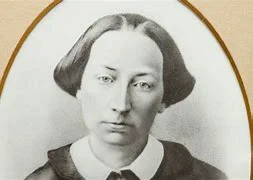
THE FIRST FEMALE UNIVERSITY STUDENT, WRITER, JOURNALIST, AND DEFENDER OF WOMEN’S RIGHTS (a life fit for the silver screen).
Today, I want to tell you about a woman who serves as an enduring example: a standard-bearer for women’s rights, a defender of progressive ideals, and a relentless advocate for equality between men and women. We must never forget the price paid for the rights we hold today; it is thanks to women like her that we have drawn closer to equality of opportunity, at least in the eyes of the law.
Born in Ferrol (La Coruña) on January 31, 1820, she was the first child of María Concepción de Ponte and Don Ángel del Arenal, members of illustrious families from Galicia and Santander. Her father’s ideology as a staunch defender of liberalism, and his premature death, would undoubtedly shape Concepción’s character. From him, she learned to hold firm to her personal convictions and to fight for what she believed was just.
Following the early death of her sister, her mother decided to move to the Court so that Concepción and her remaining sister could receive the education then deemed proper for young ladies. During these years, she learned Italian and French, never losing her interest in reading science and philosophy. Even this exclusive schooling for “ladies” could not dampen her immense intellectual curiosity.
The relationship between mother and daughter was stormy. Upon finishing her initial education, Concepción expressed her desire to pursue higher studies—a wish unheard of for a woman of the time and one her mother found utterly reprehensible.
In 1840, she returned to Armaño to care for her ailing grandmother, Jesusa de la Cuesta. Concepción was clearly determined to see her adventure through. When her grandmother passed away that same year, and her mother followed in 1841, the family inheritance fell to her. At twenty-one, Concepción Arenal became the absolute master of her own destiny. During the academic years from 1842 to 1845, she attended classes in Law, Philosophy, and Letters at the university, famously disguised as a man. It was there she met Fernando García Carrasco, whom she married on April 10, 1848. Despite the nearly fifteen-year age gap, García Carrasco was a man far ahead of his time. He understood Concepción’s aspirations perfectly and viewed her as a true equal, always welcoming her presence—often still in men’s attire—at the gatherings of the Café Iris, and respecting the income she brought home from her own work. The couple had three children, though only the two youngest survived: Fernando (born 1850) and Ramón (born 1852). Their eldest, Concepción (born 1849), tragically passed away at just two years of age.
In the early years of her marriage, Concepción leaned toward literature. She wrote poetry, three plays—A Poet, The Gold Medal, and Pain and Mystery—a zarzuela titled The Sons of Pelayo, a novel that has unfortunately been lost (History of a Heart), and her Fables in Verse (1851), a text that would later be declared mandatory reading in primary schools.
In 1855, alongside García Carrasco, she began collaborating with La Iberia, a liberal newspaper founded by Pedro Calvo Asensio. Her first contribution appeared on July 28, 1855, with the first in a series of seven articles titled “Watt, His Life and Inventions.” The author’s prose in these pieces was sober and clear, highlighting the importance of the man who helps progress the society to which he belongs. She wrote many of these unsigned editorials until the Minister of the Interior, Nocedal, enacted the Press Law of May 15, 1857, which mandated that all articles on politics, philosophy, and religion be signed. A month and a half later, La Iberia published a note acknowledging the unsigned articles written by Concepción Arenal and announcing the end of her role as a permanent editor.
Concepción then moved to Oviedo with her children; an unpublished poem, God and Liberty!, is dated there in July 1858.
Her essay Beneficence, Philanthropy, and Charity (1860) was awarded a prize by the Royal Academy of Moral and Political Sciences, despite her having submitted it under the name of her ten-year-old son, Fernando. When her true identity was revealed, the Academy awarded the prize to a woman for the first time in its history. Its members recognized the vital importance of her work in defining concepts that were then poorly understood. Concepción noted that “beneficence” referred to the state-run system of aid, “philanthropy” was a philosophical concern for human dignity, and “charity” represented Christian compassion, acting spontaneously out of love for God and neighbor.
Her next work, The Visitor of the Poor (1863), arose from observing how poorly prepared women were when trying to help the poor and the sick.
Her attention then turned to the plight of prisoners. Her well-known Letters to Criminals (1865) grew out of this experience, addressing delicate issues such as the need to reform the Penal Code—aligning her with the initiatives championed by the Krausist movement.
In 1865, the Abolitionist Society was formed to end slavery in the Spanish colonies. Concepción entered their literary contest with a poem titled Ode to Slavery, which won first prize. Following the Revolution of 1868, the provisional government named her Inspector of Houses of Correction for Women, a post she held until 1873. However, she eventually grew disillusioned with the slow pace of political reform, as reflected in her work Examination of the Bases Approved by the Cortes for the Reform of Prisons (1869).
In 1869, the Duchess of Medinaceli established the female branch of the Red Cross, and Concepción threw herself into its organization. During the third Carlist War, she personally directed the Blood Hospital of Miranda de Ebro, where soldiers from both sides were treated. This experience inspired her War Sketches (1880), where a deeply sentimental tone permeates her descriptions of the suffering she witnessed.
She also produced several foundational feminist works: The Woman of the Future (1869)—her first feminist text, though written in 1861—followed years later by The Woman in Her Home (1881), The Current State of Women in Spain (1884), and The Education of Women (1892). In these, Concepción sought not only to correct the societal errors regarding women but also to assert their intellectual capacity and their right to an education that would allow them to enter any profession on equal terms with men.
In 1870, she founded The Voice of Charity, a newspaper that for fourteen years served as a platform to denounce the abuses and immorality found in the almshouses and prisons of the time.
From 1875 onward, she wrote works such as Penal Colonies in Australia and the Punishment of Deportation (1877), The Prison Called the Model, Penitentiary Studies (1877), and Historical Essay on the Law of Nations (1879)—her most important legal work on international law. She also sent reports to Penitentiary Congresses held in Stockholm, Rome, St. Petersburg, and Antwerp. In 1878, she published another of her most famous works, The Instruction of the People, which was again honored by the Academy of Moral and Political Sciences.
In 1890, she received news that Emilia Pardo Bazán was championing her candidacy to fill a vacancy in the Royal Academy.
In 1891, she wrote the Manual for the Visitor of the Prisoner and prepared her contributions for the second pedagocial congress—The Instruction of the Worker and the aforementioned The Education of Women (1892).
In her final years, Concepción Arenal’s output slowed as she focused on the edition of her complete works—from which, incomprehensibly, her literary pieces were excluded. Nevertheless, despite her age and failing health, she collaborated with numerous periodicals of the day, including the Bulletin of the Free Institution of Teaching, Modern Spain, and The Spanish and American Illustration, among others.
In January 1893, her health declined sharply, and she passed away on February 4.
Information extracted from Biblioteca Virtual Miguel de Cervantes